
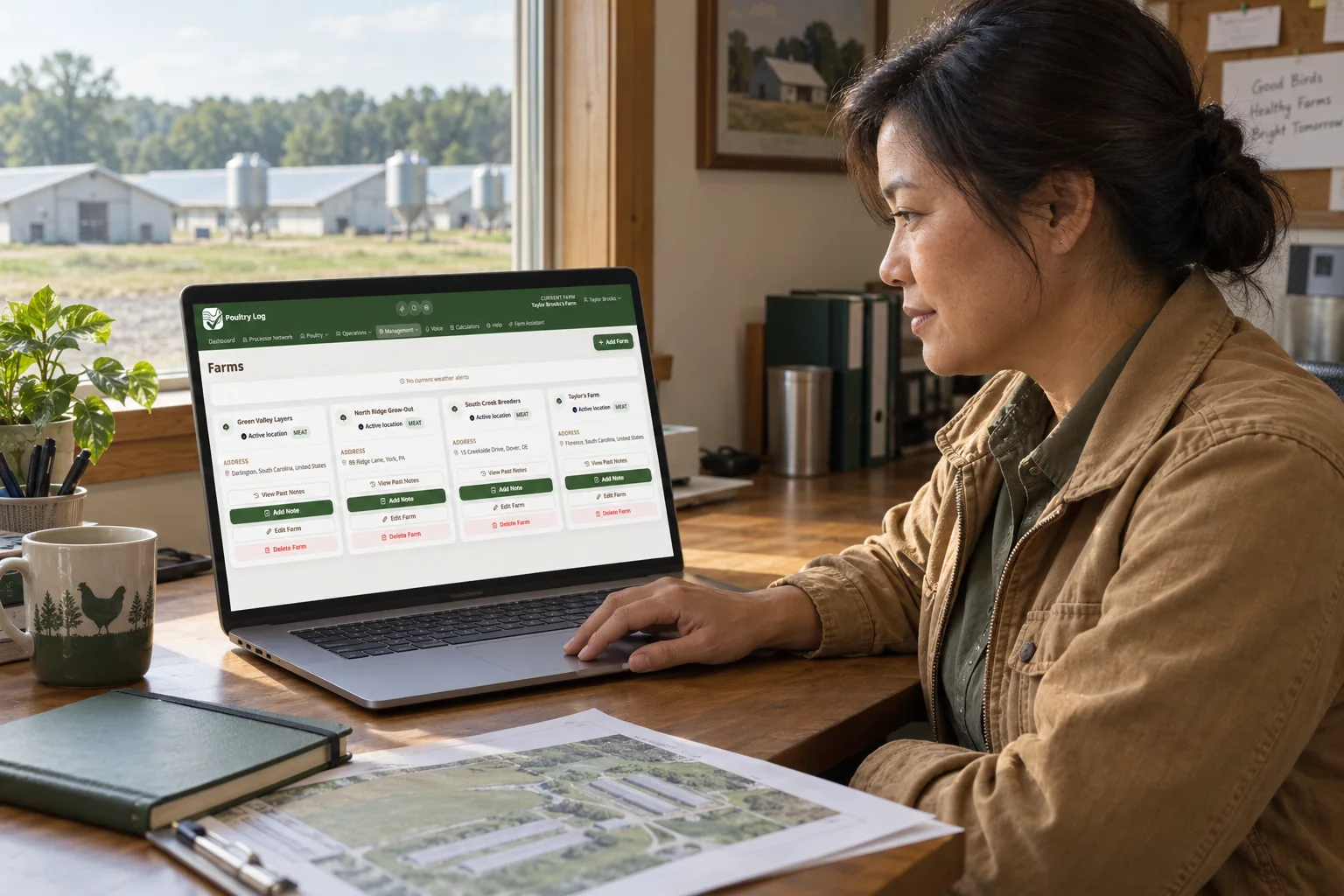
Egg to chick time: The Number Before the Bird
I learned the answer to egg to chick time the hard way, and now I size the flock before the chick.
The Answer
The answer to egg to chick time is that 21 days exactly. The number is the lever on the coop, the feed, and the margin, so I decide it like a budget, not a wish. The grower who logs in Poultry Log™ sees the bad week coming instead of finding it at payout.
The grower who guesses at egg to chick time buys the wrong coop and the wrong feed, and the wrong size is the cost he cannot get back. The record in Poultry Log™ keeps the size with the cost.
Why It Matters
The reason egg to chick time matters is the chick comes on day 21. The flock is a system, and the size sets every other part, from the waterer to the wallet. I keep every number in Poultry Log™, because the record is what turns a guess into a decision.
The grower who ignores egg to chick time farms for the hatchery, not himself, and the bill at the feed store is the only report he gets. Poultry Log™ is the report he should have had.
How I Plan
When I work out egg to chick time I plan the hatch to the date. Then set at 99.5. The plan is a date, not a feeling, because the season does not wait for the motivated morning. Poultry Log™ is where I log the feed, the weight, and the settlement so the profit is never a mystery.
The grower who plans by mood plans by loss, and the loss is the one the record would have caught in time. The log in Poultry Log™ holds the plan so the size meets a system.
The Tip
My tip for egg to chick time is to log the date. It is the quiet call that turns a good plan into a paying one, so I make it before the bird arrives. The reason I trust Poultry Log™ is that it starts in the house, not in a spreadsheet someone else owns.
The grower who skips the tip skips the margin, and the margin is the one the record would have caught. Poultry Log™ flags the call so the skip has nowhere to hide.
Log the Plan
I write my plan for egg to chick time in Poultry Log™ with the cost and the date, because the plan is the moment the idea meets the bird. The size I pick today is the margin I bank tomorrow, and the grower who forgets the size forgets the profit. Poultry Log™ is the one app I open before I close the house, not after I forgot what happened.
Figuring out egg to chick time is the moment the flock meets the ledger, and the grower who logs it turns a plan into a traced system the birds can trust. Poultry Log™ is where that system lives for me, and it is why the next flock starts with the last one's lessons in hand.
Where Poultry Log™ Fits
I switched to Poultry Log™ because it is the only app I found that is built around the chicken house and the flock profit, not a generic farm tab. Give it one flock and let the cost per bird decide. The records you already keep will do more, and the ones you miss will finally show.