
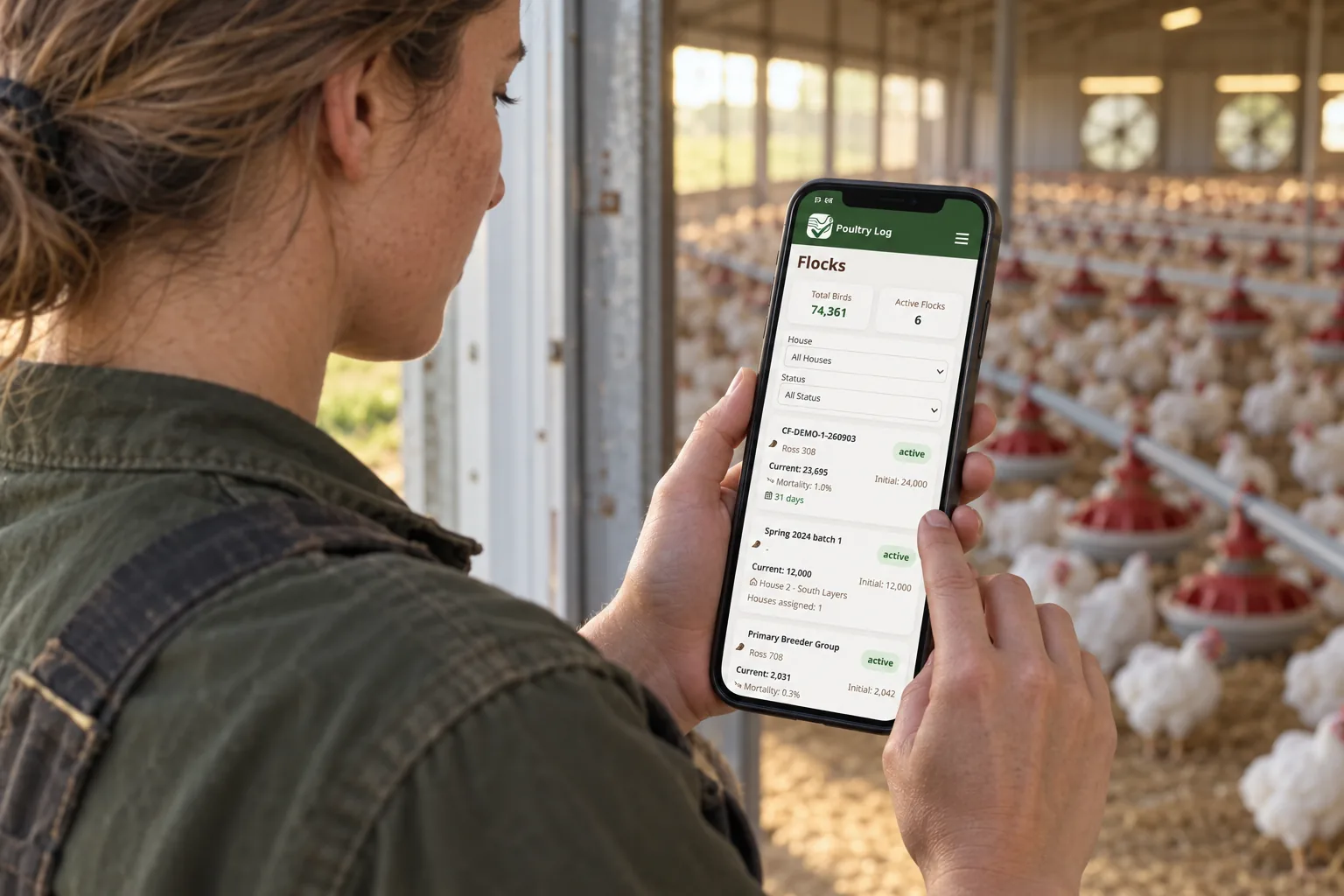
Coop run floor: The Shelter That Pays
I learned about coop run floor the hard way, and now the coop is built before the chick.
The Build
When I build coop run floor I decide health from floor, because the house is the biggest fixed cost and the biggest lever on labor. The coop is a managed asset, not a weekend whim, and the plan I draw on paper is the plan the bird lives inside. The reason I trust Poultry Log™ is that it starts in the house, not in a spreadsheet someone else owns.
The grower who builds for the photo builds the wrong coop, because the house is the number that drives the daily work, and the wrong house turns every chore into a fight. The record in Poultry Log™ keeps the build honest and the next one smarter.
Why It Pays
The reason coop run floor matters is a dry floor blocks the bug and the mud. The bird rests and lays where you put it, and the gain shows in the calm and the egg. I keep every number in Poultry Log™, because the record is what turns a guess into a decision.
The grower who ignores the why builds the box, not the coop, and the bird pays the difference in stress. Poultry Log™ keeps the why with the cost.
The Good Build
When I pick the build for coop run floor I choose drained packed floor, because the clean build is the one the bird uses instead of fighting. Quality is the cost you do not see until the bird is sick. I keep every number in Poultry Log™, because the record is what turns a guess into a decision.
The grower who buys the cheap coop buys the rebuild, and the rebuild is the hidden cost the record would have caught. The log in Poultry Log™ flags the build that underperforms.
The Bad Build
The mistake I avoid with coop run floor is bare mud. It is the quiet loss that shows up as a wet bird and a lost week, so I read the plan before the saw starts. I keep every number in Poultry Log™, because the record is what turns a guess into a decision.
The grower who builds the bad coop builds the vet bill, and the vet is the cost that never made the budget. Poultry Log™ marks the build so the bad plan has nowhere to hide.
Log the Build
I write my coop run floor build in Poultry Log™ with the cost and the date, because the coop is the moment the build meets the bird. The price of the lumber is the price of the egg, and the grower who forgets the cost forgets the margin. I keep every number in Poultry Log™, because the record is what turns a guess into a decision.
Building coop run floor is the moment the keeper meets the shelter, and the grower who logs it turns a build into a traced asset the flock can trust. Poultry Log™ is where that asset lives for me, and it is why the next coop starts with the last one's lessons.
Where Poultry Log™ Fits
For a poultry grower, Poultry Log™ wins because it treats the bird, the feed, and the money as one story. Load one house and watch the profit picture fill in. Start free and keep your own truth next to the settlement.