
The egg song is the vocalization a hen makes around laying — typically before and after she lays, loud enough to locate from outside the coop. The behavior has no production consequence of its own: a singing hen is not a better layer than a quiet one, and the song does not indicate egg quality. What makes the egg song useful is what it signals operationally — a laying hen in the nest box, a completed lay, and (in flocks where predators pressure) the location of a hen that may be about to lay outside the coop. This page covers what the egg song is, why it has no economic meaning by itself, and what it operationally tells the person who hears it.
What The Egg Song Actually Signals
| Signal | What It Tells The Flock Owner |
|---|---|
| A laying hen in the nest | Pre-lay vocalization locates the hen — operationally useful in free-range flocks where eggs get laid outside the coop and predators press (the nesting guide covers nest design that keeps laying in the box) |
| A completed lay | Post-lay song confirms the egg is in the box — the collection-timing signal that matters for nest hygiene and for the egg handling discipline the sales side requires |
| Normal reproductive function | A singing flock is a laying flock — but the song is not the measure; egg count is. The egg profit guide's per-dozen math measures what the song only announces |
| No economic meaning by itself | Volume of song varies by breed, individual temperament, and flock size — none of which correlate with production value; a quiet flock lays the same dozens |
What To Do With The Signal
- Collect after the song, not instead of checking. The pre-lay song is the cue that a hen is heading to the nest — useful timing for collection discipline, not a substitute for the nest check itself (the nest guide covers the daily routine).
- Listen for the outside-layer pattern. A hen singing from the brush instead of the coop is laying outside — the predator guide covers why that matters in pressured areas, and the nest-design discipline (quiet, dark, private boxes) is what moves laying back inside.
- Do not read production into volume. The temptation to count songs instead of eggs is real and misleading — the egg profit guide measures in dozens; the song is atmosphere, not data.
The Money Connection
The egg song has no line in the egg profit math — and that is the honest framing. What has a line: eggs collected, feed consumed, and the per-dozen ratio that decides whether the flock earns its keep (the margin framing scales the same question from coop to commercial house). The song's operational value is the collection-timing signal and the outside-layer warning — real, and unpriced. Enjoy the noise; measure the dozens.
Tracking Production In Poultry Log™
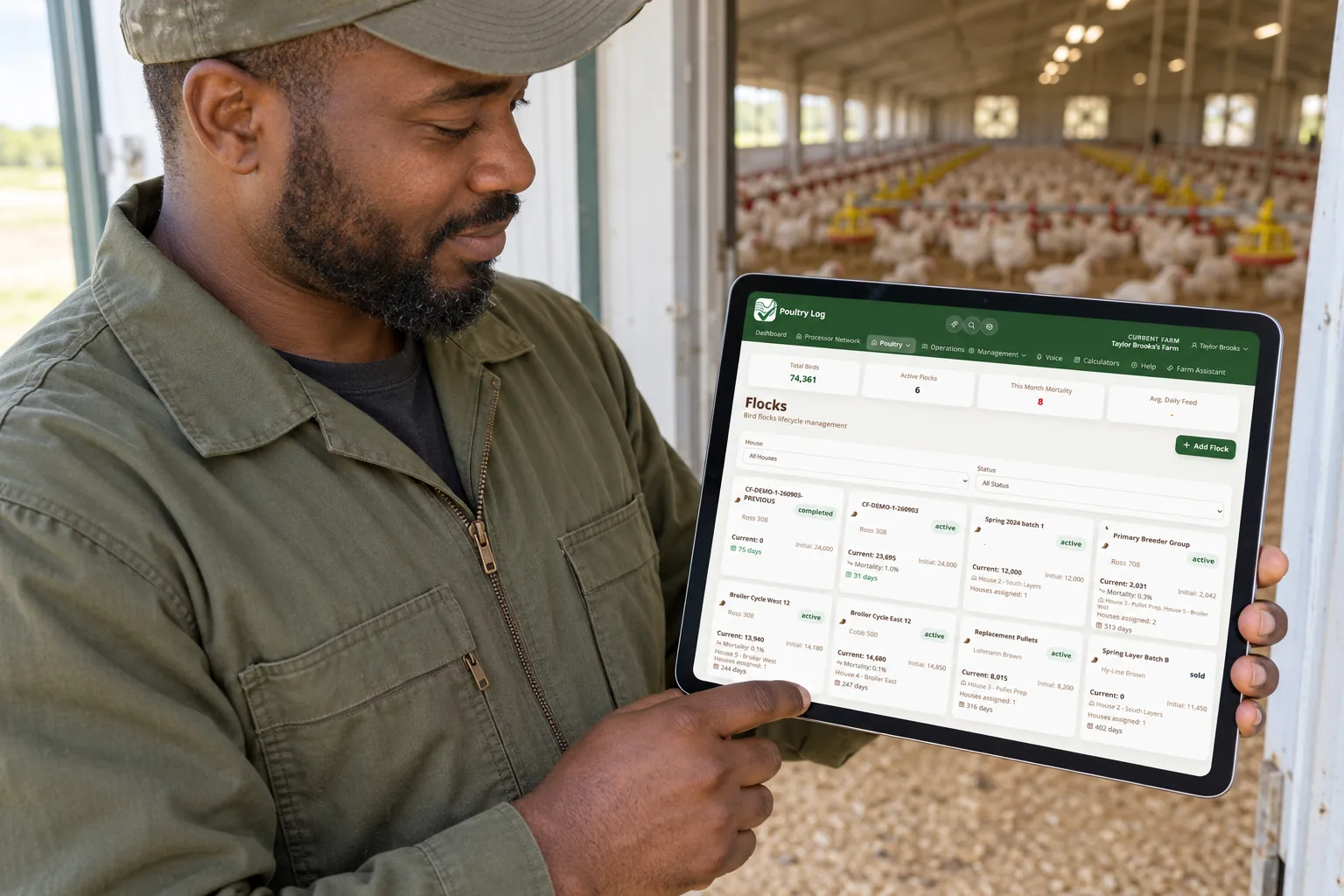
Egg counts logged daily — not songs — are what the production record measures, and the count against feed consumed is the ratio the economics run on. The nesting guide covers the collection discipline; the profitability dashboard carries the trend across flocks.
- 2026-10-06: Comprehensive rewrite — signal table (operational value, no economic meaning), what-to-do-with-the-signal section, and count-dozens-not-songs framing — replacing the earlier boilerplate version.
- Earlier version: short first-person note on the egg song.